Overview
Mobile Device Checkup
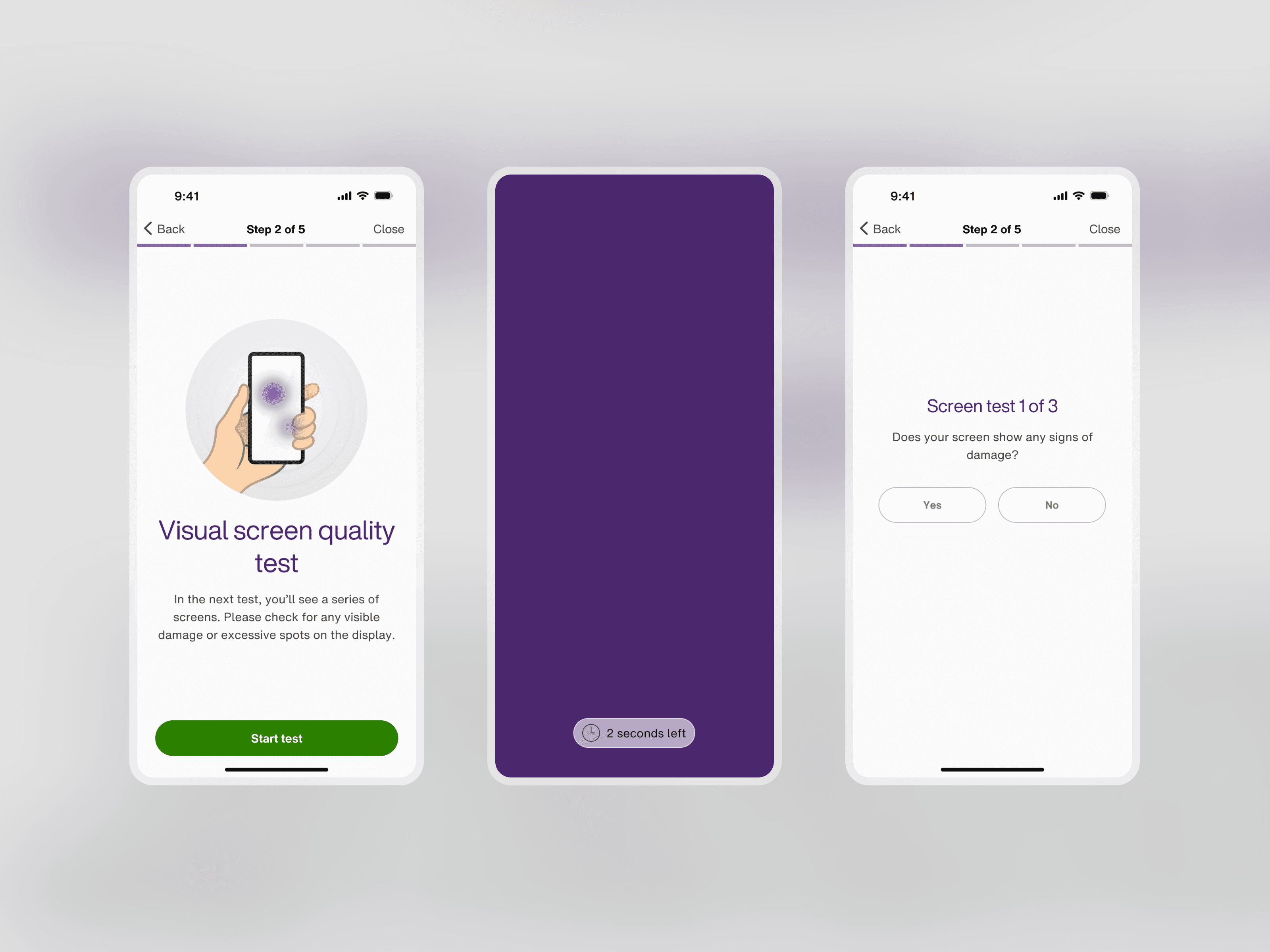
The Device Checkup integration is an automated diagnostic tool, created by a third-party vendor, that allows users to self-assess their phone’s hardware and software health for trade-ins and repairs. I redesigned the third-party flow to meet TELUS accessibility and branding standards, ensuring users could accurately value their devices through a seamless journey.
Year
2025
Project type
Mobile app
Client
TELUS + MCE Systems
Introduction
Cost of device checkups
When a customer returns a device to TELUS, an improper estimation can be expensive at the scale of the organizer. Currently, customers answer five Yes/No questions to value their trade-ins. This process led to a massive gap between the estimated value and the actual condition once the device reached the warehouse, causing revenue loss from overestimated credits, repair costs, or unsellable devices.
To fix this, TELUS hired a third-party to utilize their diagnostic SDK to run automated hardware checks. However, the tool didn't meet our branding, UI standards, or accessibility requirements. My role in this project was to own the UX strategy and visual redesign with a focus on strong usability and design standards, ensuring a unified experience with the My TELUS app.
Impact
Automating an accurate self-serve device evaluation
$11 saved per device assessment through accurate grading and fewer manual overrides by warehouse staff
857 daily journey launches, with 97% of users completing the flow without requiring further support for their device.
90% of SDK launches opened on the My TELUS app, compared to in-store retail app, showing high digital adoption
Problems
The disconnected experience
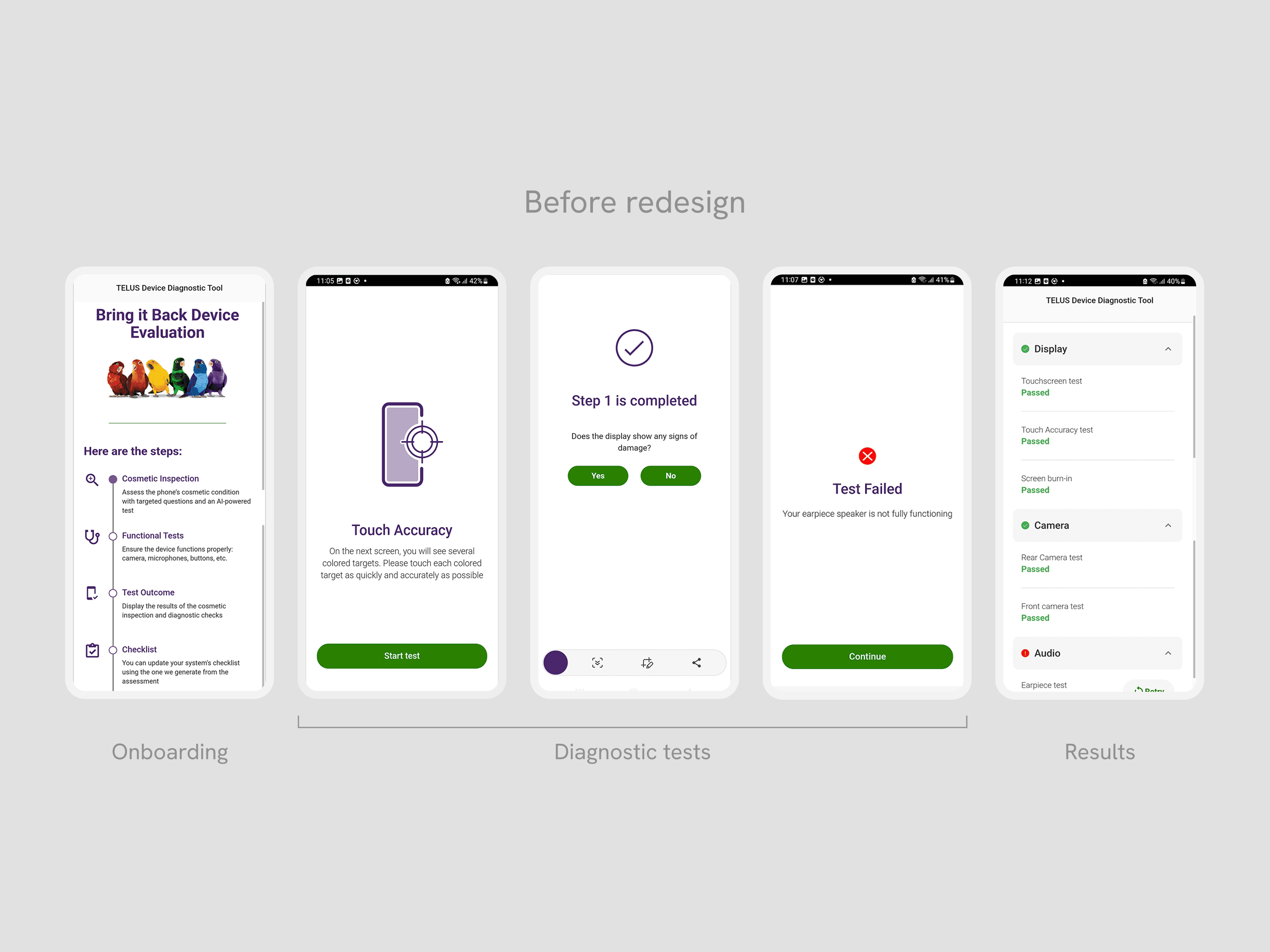
The design of the vendor-led experience had usability and accessibility issues, while ignoring both TELUS and general design consistency across screens. During our initial walkthrough of the SDK, we identified two main issues:
The design mismatched the rest of the My TELUS app
The delivered SDK ignored our branding guidelines, including the design system used by any digital products from TELUS. This created inconsistency across multiple steps within the flow, and not to mention, from the rest of the My TELUS app where it would be accessed.
Usability issues would block users from continuing
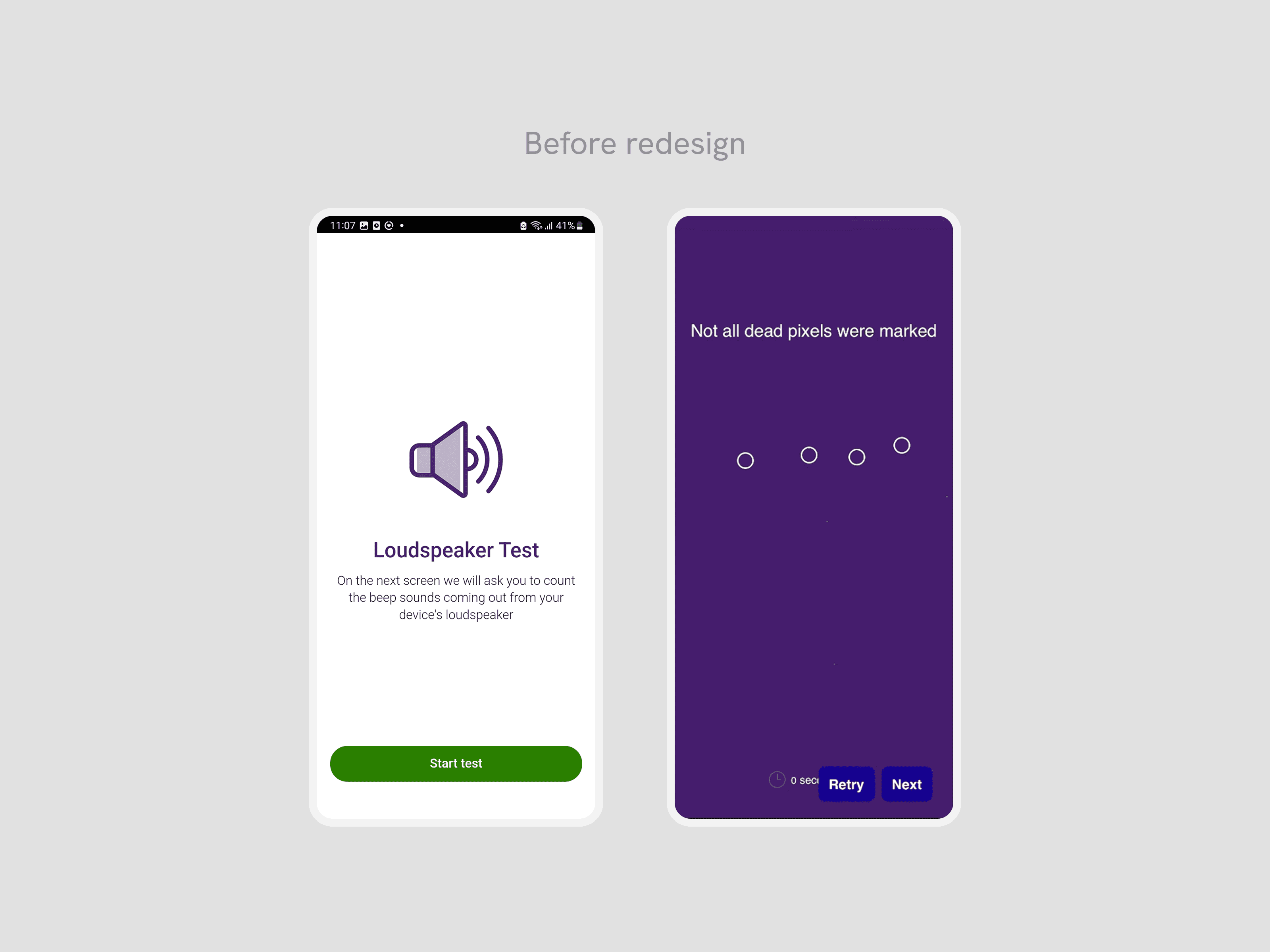
With audio being required for some tests, the app assumes a perfect listening environment and physical ability. In others, the low contrast of buttons and information makes it invisible. By impacting their ability to complete the test, users would be incorrectly assessed for a lower credit, resulting in a poor user experience.
Opportunity
An audit and redesign to improve the functionality & usability
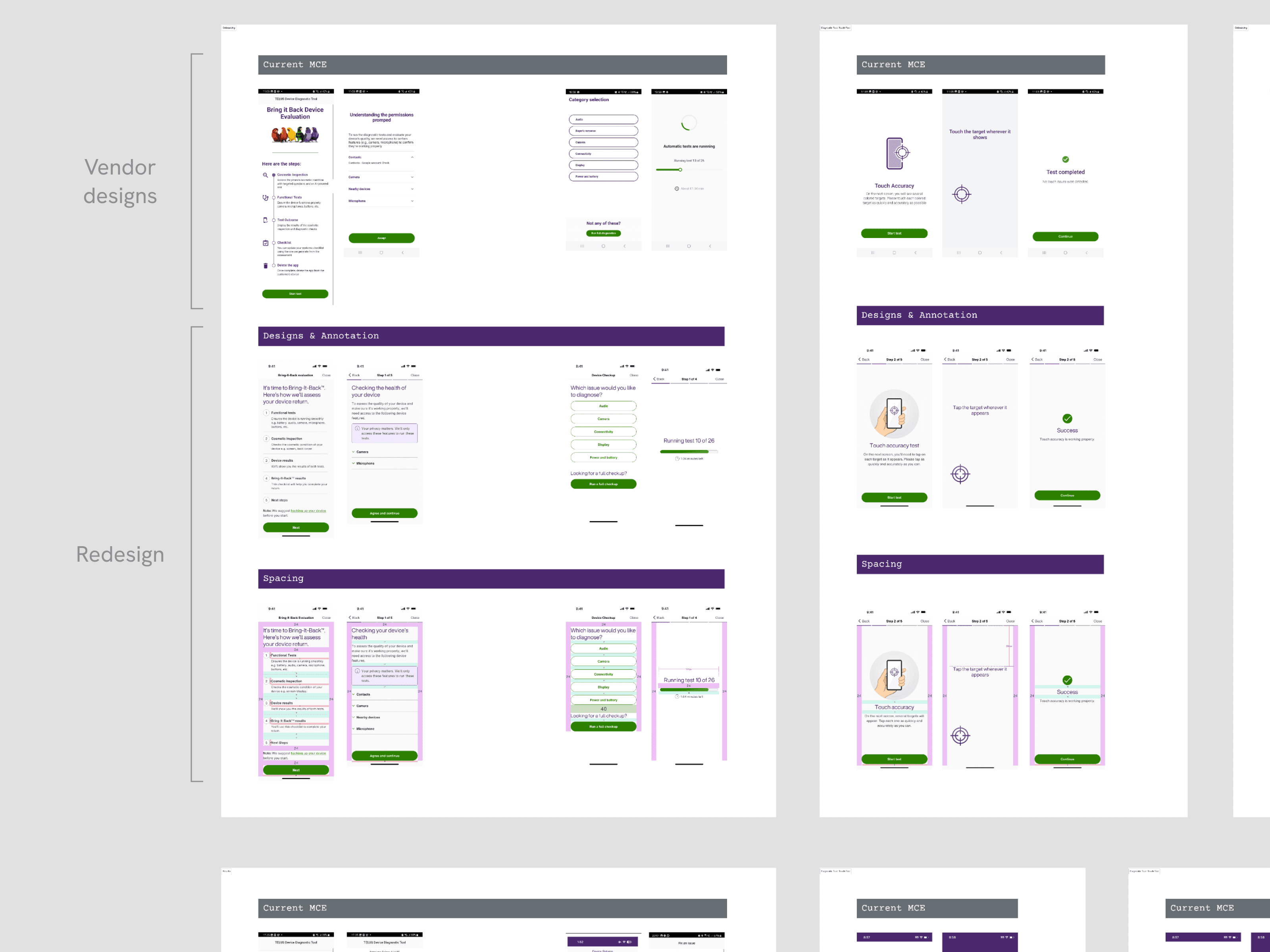
The core challenge was creating a consistent, usable experience across many screens and test types, within the technical boundaries of a third-party SDK. Together with a content writer, we audited the entire flow to identify where inconsistency and complexity were creating friction, then focused our redesign on three things: standardized layout templates for consistency across every test screen, new components that surfaced enough information to guide users through complex tests, and applying our knowledge of user journeys to point every step clearly to the next best action.
Process
Setting priorities for the redesign
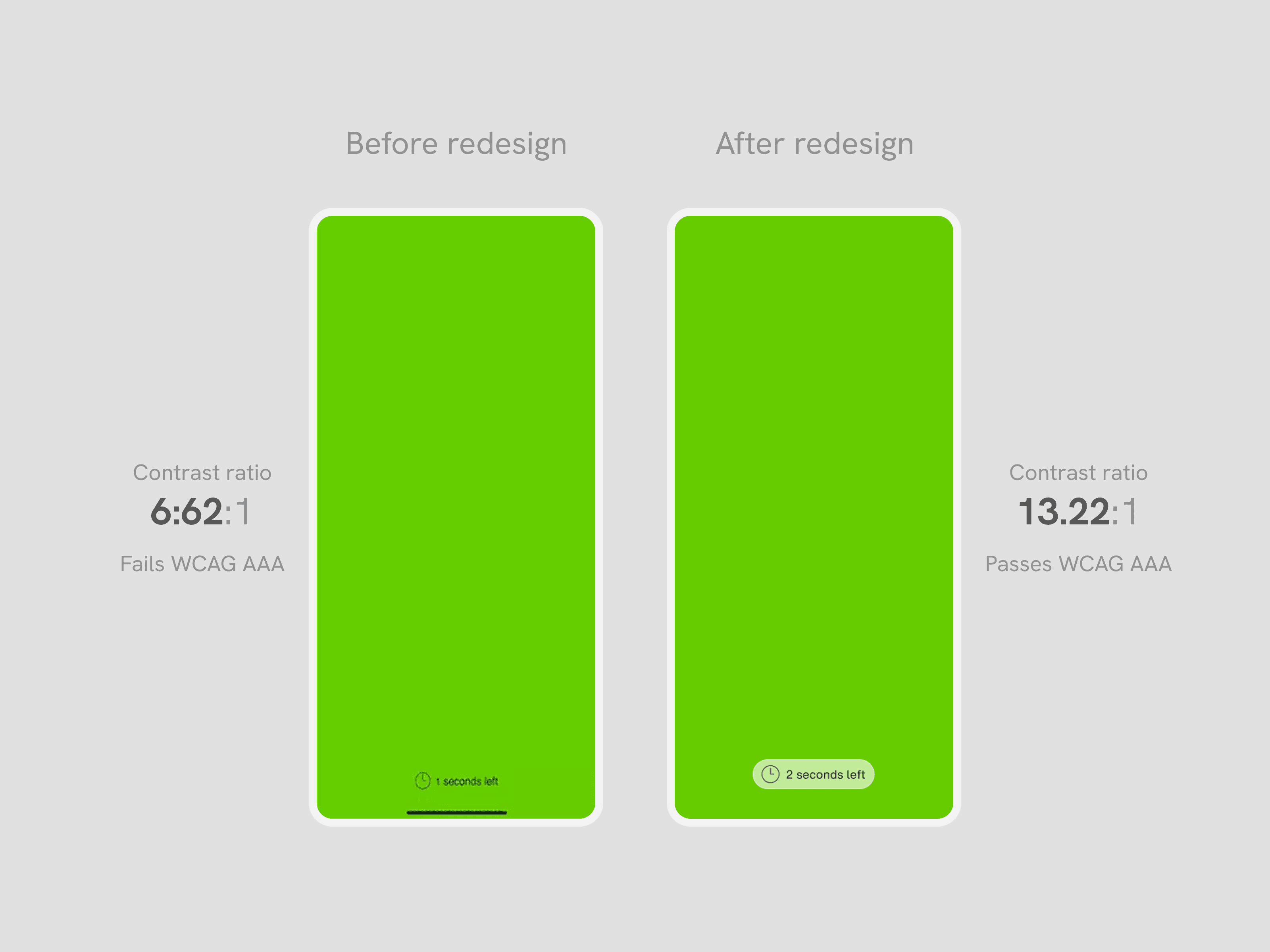
With release timelines in mind, branding and design system alignment came first — getting the experience to feel native to My TELUS was a hard requirement. But rather than just reskinning screens, I used the design system as a foundation to build new patterns purpose-built for this flow, like a countdown timer to pace users through timed hardware tests. These components extended the system coherently, so they felt native without slowing us down.
Final designs
Reskinned and optimized flow
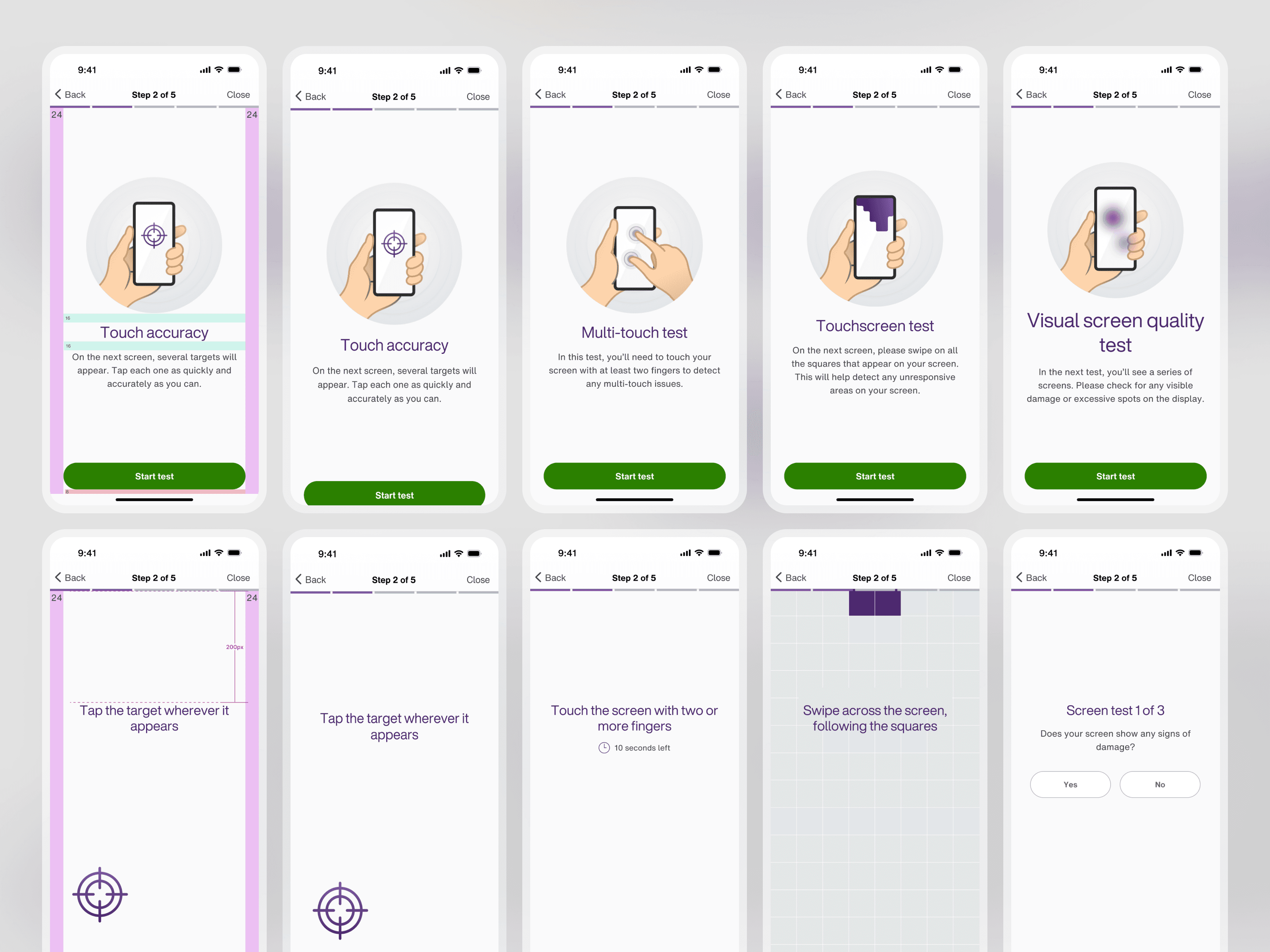
After redesigning the screens with our TELUS digital branding and accessibility in mind, the flow had both aesthetic and usability improvements.
A cohesive, native experience
By aligning the vendor's SDK with the TELUS design system, I transformed the disjointed third-party flow into a integrated feature that feels native to the My TELUS app. I overhauled the typography and components, grounded by new layout templates, to ensure brand consistency. This helped to reduce cognitive load, allowing users to focus on their tests instead of navigating ever-changing interfaces.
Designing for inclusive and real-world usage
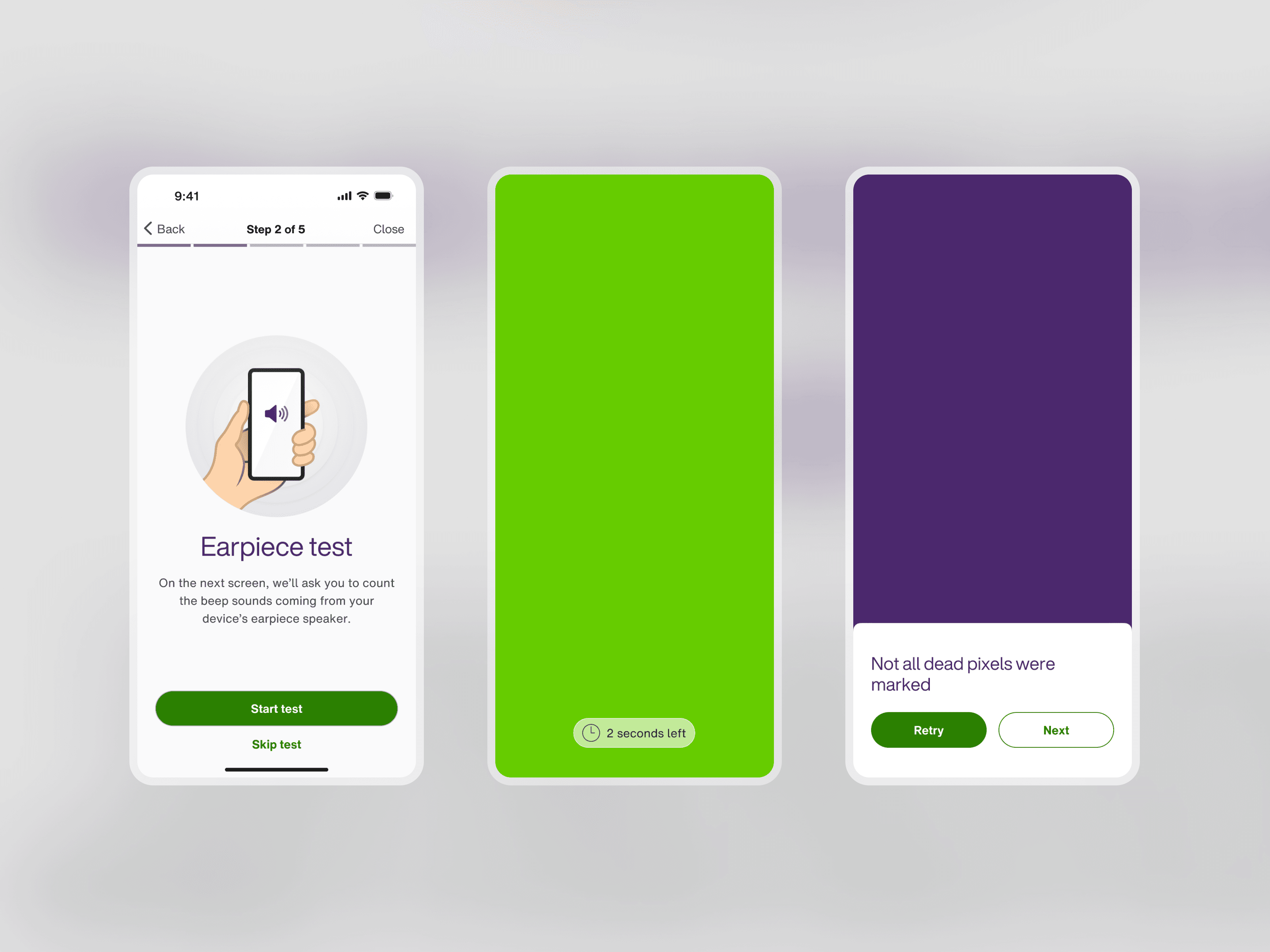
The diagnostic tests were optimized by introducing flexible test logic and improving visual feedback with WCAG contrast ratios. By allowing users to skip tests, we ensured that non-ideal test environments wouldn't result in unfairly low assessment results.
Increasing device returns through clarity
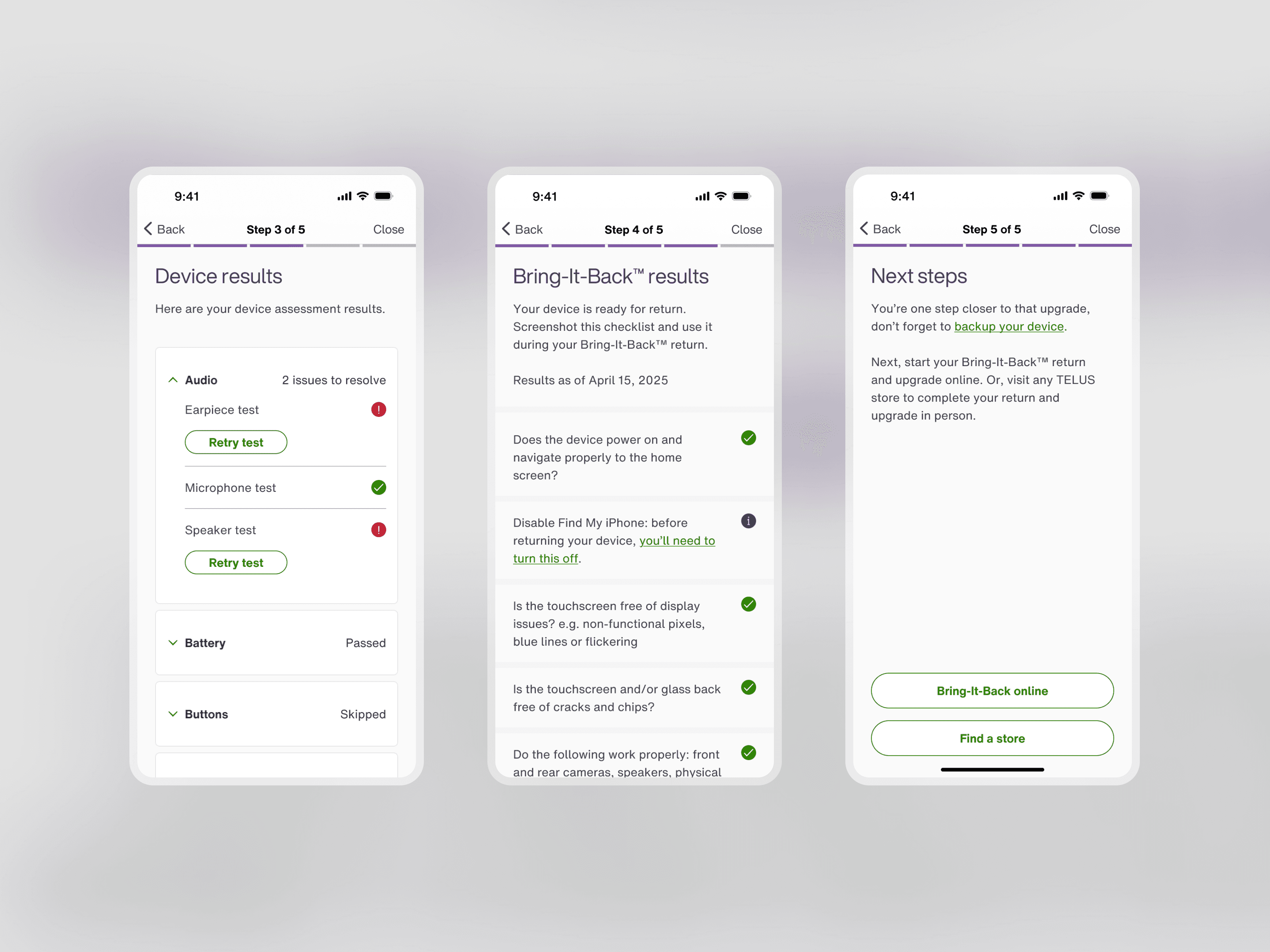
By simplifying each test and facilitating stakeholder discussions, our redesign helped to guide users towards the next best action of returning their phone. Our final call-to-actions allow users to start their next step in the device return process without friction.
Takeaways
Key takeaway
This project reinforced that design principles doesn't stay isolated within Figma. Working with a vendor team meant I couldn't assume shared context in our organization's design standards. I became an advocate for the TELUS Design System, running alignment sessions and translating our internal standards into detailed annotated specs for their developers to learn and use. Strong documentation was the primary collaboration tool that kept our teams focused on the same goal across time zones and knowledge gaps.
Looking back, I'd push the Product team to involve a designer much earlier — during the SDK development itself, not after. Auditing and reskinning a delivered product creates redundant work that could be avoided if user goals were considered from the start with a designer at the table during planning.